What Is a High School Intro to Philosophy Course? A Guide for Homeschool Families
A high school intro to philosophy course introduces students to some of life’s biggest questions: What is truth? What is justice? How do we know what we know? What makes an argument strong or weak? What does it mean to live a good life?
Unlike a course that focuses only on memorizing facts, philosophy asks students to think deeply, question assumptions, evaluate arguments, and consider different perspectives. For homeschool families, philosophy can be an especially meaningful high school elective because it encourages students to develop the habits of mind they will use in college, careers, relationships, citizenship, and everyday decision-making.
A strong introductory philosophy course does not need to turn students into professional philosophers. Instead, it should help them become more careful thinkers, more thoughtful readers, and more confident communicators.
Why Study Philosophy in High School?
High school is an ideal time to introduce philosophy because teenagers are already beginning to ask bigger questions about identity, belief, fairness, truth, purpose, and society. A philosophy course gives students a structured way to explore those questions while also building academic skills.
Philosophy helps students practice:
- Asking clear and thoughtful questions
- Examining assumptions
- Reading complex ideas
- Comparing different viewpoints
- Building logical arguments
- Supporting claims with reasons
- Respectfully disagreeing with others
- Reflecting on their own beliefs and perspectives
For homeschool students, philosophy can also add depth to a high school transcript. It shows that a student has studied a rigorous humanities subject that connects to history, literature, government, religion, ethics, and writing.
What Topics Are Usually Included in a High School Philosophy Course?
An introductory high school philosophy course usually gives students a broad survey of major philosophical questions, thinkers, and branches of philosophy. The goal is not to cover every philosopher in history, but to give students a strong foundation in how philosophers think and why philosophical questions matter.
Common topics include:
1. What Is Philosophy?
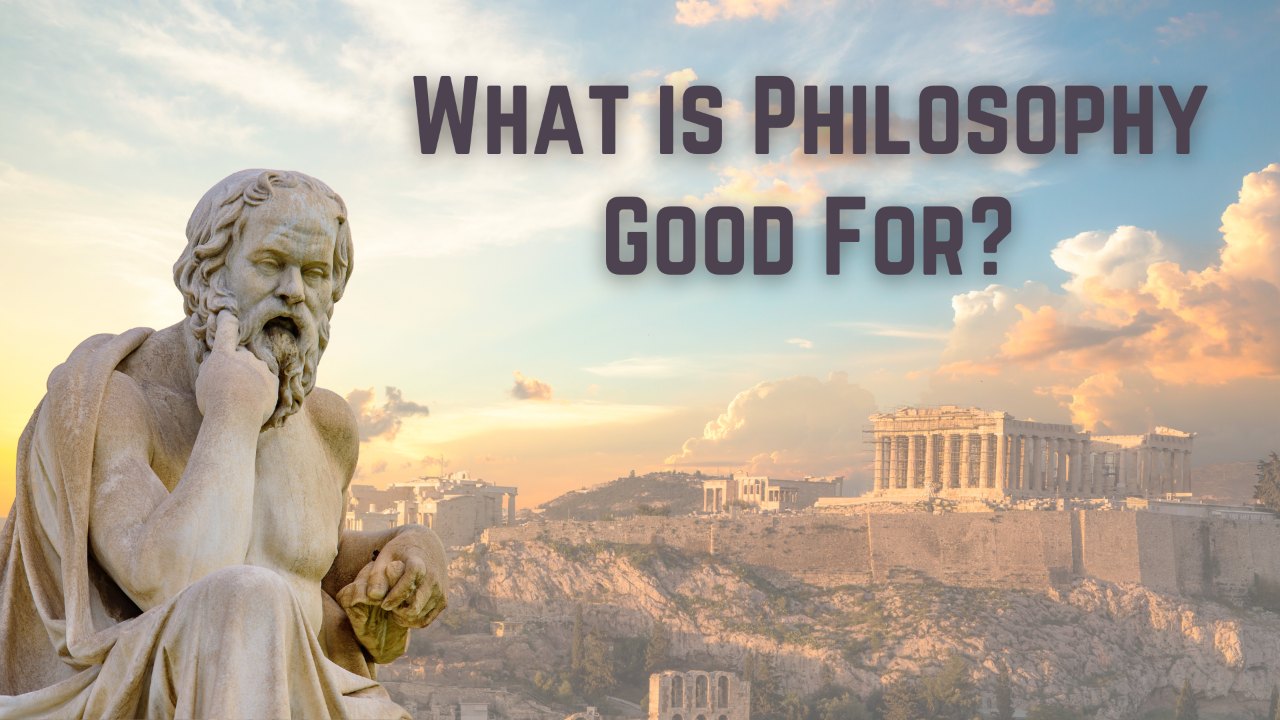
Most courses begin by defining philosophy itself. Students learn that philosophy means “love of wisdom” and that it has historically included questions about knowledge, reality, ethics, politics, science, mathematics, law, and human nature.
Students may also learn that philosophy was once much broader than the modern academic subject. Ancient and classical philosophers often studied questions we would now associate with science, medicine, mathematics, politics, and education.
This helps students understand philosophy as a foundation for many other fields of study.
2. Logic and Argumentation
Logic is one of the most practical parts of a philosophy course. Students learn how to identify claims, reasons, evidence, assumptions, and conclusions.
They may study questions such as:
- What makes an argument valid?
- What makes an argument sound?
- What is the difference between a claim and evidence?
- What are common logical fallacies?
- How can we disagree without misrepresenting someone else’s view?
This part of philosophy is especially useful for high school students because it supports writing, debate, history, literature analysis, and everyday reasoning.
3. Epistemology: The Study of Knowledge
Epistemology asks questions about knowledge and belief.
Students may explore questions such as:
- How do we know what is true?
- What is the difference between knowledge and opinion?
- Can our senses be trusted?
- What role does reason play in knowledge?
- How do culture, experience, and perspective shape what we believe?
This topic helps students think critically about information, media, bias, evidence, and certainty.
4. Metaphysics: The Study of Reality
Metaphysics explores questions about existence, reality, identity, and the nature of the world.
Students may consider questions such as:
- What is real?
- What makes a person the same person over time?
- Do humans have free will?
- What is the relationship between the mind and the body?
- Is reality only physical, or is there more to it?
While these questions can feel abstract, they often lead to rich discussion and reflection.
5. Ethics: The Study of Right and Wrong
Ethics is often one of the most engaging parts of a high school philosophy course. Students examine different ways people have tried to answer questions about morality and human behavior.
Students may ask:
- What makes an action right or wrong?
- Should we focus on consequences, duties, virtues, or intentions?
- Are moral truths universal or shaped by culture?
- What does it mean to live a good life?
- How should people make difficult moral decisions?
Ethics gives students a structured way to think about real-world issues without reducing them to simple opinions.
6. Political Philosophy
Political philosophy examines questions about government, justice, rights, freedom, authority, and citizenship.
Students may study questions such as:
- What is justice?
- Why do governments exist?
- What rights should people have?
- What makes a society fair or unfair?
- When should people obey authority?
- What responsibilities do citizens have?
This topic connects naturally to world history, government, civics, and current events.
7. Major Philosophers Throughout History
A high school intro course often includes a survey of influential philosophers. Students might study thinkers such as Socrates, Plato, Aristotle, Confucius, Augustine, Aquinas, Descartes, Locke, Rousseau, Kant, Mill, Marx, Nietzsche, or others depending on the course design.
The purpose is not simply to memorize names. Instead, students learn to understand the questions these philosophers asked, the arguments they made, and the way their ideas influenced history, politics, education, ethics, and culture.
8. Applying Philosophy to Real Life
A good philosophy course should not stay only in the abstract. Students should have opportunities to connect philosophical questions to their own lives and to the world around them.
For example, students might consider:
- How do I know whether a source is trustworthy?
- What makes a rule fair?
- How should I respond when I disagree with someone?
- What does it mean to be a responsible citizen?
- How do my experiences shape the way I see the world?
- What kind of person do I want to become?
This is one reason philosophy works so well as a high school elective. It builds academic thinking while also encouraging personal reflection.
Is Philosophy Appropriate for High School Students?
Yes, philosophy can be very appropriate for high school students when it is taught in an age-appropriate and structured way.
High school students do not need to read long, advanced philosophical texts in order to benefit from philosophy. Instead, they can begin with short readings, guided explanations, discussion questions, real-life examples, and carefully selected excerpts from major thinkers.
An introductory course should make philosophy accessible without watering it down. Students should be challenged to think carefully, but they should also receive enough support to understand difficult ideas.
For homeschool families, this is especially important. A well-designed self-paced philosophy course can give students a rigorous humanities elective without requiring the parent to be an expert in philosophy.
What Skills Does a Philosophy Course Build?
A high school philosophy course can strengthen many academic and life skills.
Critical Thinking
Students learn to question assumptions, evaluate reasons, identify weak arguments, and consider multiple perspectives. This helps them become less likely to accept claims simply because they are popular, emotional, or familiar.
Reading Comprehension
Philosophy often requires students to slow down and read carefully. Even short passages may contain complex ideas. Students practice identifying the main argument, defining key terms, and explaining an author’s reasoning.
Writing and Argumentation
Philosophy is excellent preparation for argumentative writing. Students learn to make clear claims, support those claims with reasons, respond to opposing views, and explain why their argument makes sense.
Perspective-Taking
Students learn to “try on” different philosophical perspectives. They may not agree with every thinker they study, but they practice understanding ideas before evaluating them.
Discussion and Communication
A philosophy course can help students express complex thoughts more clearly. It also gives them practice disagreeing respectfully, asking better questions, and listening carefully to other viewpoints.
Self-Reflection
Philosophy invites students to examine their own beliefs, values, experiences, and cultural perspectives. This can help students become more thoughtful about how they see themselves and the world.
How Is Philosophy Different from Logic, Ethics, or Worldview Studies?
These subjects overlap, but they are not exactly the same.
Logic is one branch of philosophy focused on reasoning and argument structure. Ethics is another branch of philosophy focused on right and wrong. Worldview studies often examine belief systems, religion, values, and cultural assumptions.
A full introductory philosophy course may include all three, but it usually goes broader. Philosophy may also include knowledge, reality, human nature, politics, aesthetics, and the history of ideas.
In other words, a philosophy course can include logic, ethics, and worldview questions, but it is not limited to only one of those areas.
Can Philosophy Count as a High School Credit?
For many homeschool families, philosophy can count as a high school elective. Depending on your homeschool requirements, it may be listed as a humanities elective, social studies elective, philosophy elective, or sometimes as part of a broader worldview or logic course.
A half-credit philosophy course often represents one semester of work. A full-credit course usually represents a full year of study or a larger workload.
Homeschool requirements vary by state, so families should always check their local requirements and keep clear course records. Helpful documentation may include:
- Course title
- Course description
- List of topics covered
- Reading list or lesson list
- Major assignments
- Quizzes or assessments
- Final grade
- Approximate hours completed
A self-paced course can make this easier because the structure, lessons, and assessments are already organized.
What Should Parents Look for in a High School Philosophy Course?
When choosing a philosophy course for a homeschool high school student, parents should look for a course that is structured, age-appropriate, and academically meaningful.
A strong course should include:
- Clear explanations of philosophical ideas
- Student-friendly lessons
- Major branches of philosophy
- A variety of philosophers and perspectives
- Questions that encourage reflection
- Practice with arguments and reasoning
- Assessments or assignments
- A manageable pace
- Parent or instructor guidance when possible
The best course format depends on the student. Some students enjoy live discussion, while others do well with a self-paced format that allows them to move through lessons independently.
For busy homeschool families, a self-paced course can be especially helpful because it gives students independence while still providing structure.
What Does a Self-Paced Philosophy Course Look Like?
A self-paced high school philosophy course usually includes organized modules or units that students complete independently. Each lesson may include reading, short video or text instruction, reflection questions, and a quiz or activity.
A simple course structure might look like this:
| Course Component | Purpose |
|---|---|
| Short lessons | Introduce key ideas in manageable pieces |
| Readings or excerpts | Expose students to philosophical questions and thinkers |
| Reflection prompts | Help students connect ideas to their own thinking |
| Argument practice | Build reasoning and writing skills |
| Quizzes | Check understanding |
| Parent guidance | Help families track progress and assign credit |
A self-paced format works well for homeschool students who need flexibility, but it should still include clear expectations and meaningful work.
Why Philosophy Works Well for Homeschool High School
Philosophy is a strong fit for homeschool high school because it is flexible, discussion-friendly, and skill-rich. It can be completed independently, discussed with a parent, or used as part of a co-op or small group.
It also pairs well with other high school subjects. Philosophy connects naturally to:
- World history
- Government
- Literature
- Theology or world religions
- Psychology
- Sociology
- Debate
- Writing and rhetoric
For students who enjoy big questions, philosophy can become one of the most memorable courses of high school. For students who need stronger reasoning and writing skills, philosophy provides meaningful practice in a fresh and engaging way.
Final Thoughts: What Is the Purpose of a High School Philosophy Course?
The purpose of a high school intro to philosophy course is not to tell students what to think. The purpose is to teach them how to think more carefully.
Students learn to ask better questions, evaluate arguments, consider different perspectives, and reflect on their own beliefs. They also gain tools that support writing, reading, discussion, and decision-making.
For homeschool families, philosophy can be a valuable high school elective because it is both academically rigorous and personally meaningful. It gives students a chance to explore some of the most important questions humans have asked throughout history while developing skills they will use far beyond the course itself.
If you are looking for a structured way to add philosophy to your homeschool high school plan, a self-paced intro to philosophy course can provide the lessons, guidance, and assessments needed to make the subject approachable and transcript-friendly.
Frequently Asked Questions About High School Philosophy
Can homeschool students take philosophy in high school?
Yes. Philosophy can be an excellent high school elective for homeschool students. It helps students practice critical thinking, argumentation, reading comprehension, discussion, and reflection.
What grade level is best for a high school philosophy course?
Many students are ready for an introductory philosophy course in grades 9–12. Older students may be able to handle more advanced readings and writing, but younger high school students can still benefit from guided lessons and accessible examples.
Does philosophy count as a social studies credit?
In many homeschool programs, philosophy is counted as an elective, humanities credit, or social studies elective. Requirements vary, so families should check their state or umbrella school guidelines.
Is philosophy hard for high school students?
Philosophy can be challenging, but it does not have to be overwhelming. A well-designed introductory course breaks big ideas into manageable lessons and gives students support as they learn to analyze arguments and think through abstract questions.
What is the difference between philosophy and ethics?
Ethics is one branch of philosophy. Ethics focuses on questions about right and wrong, morality, virtue, duty, consequences, and the good life. Philosophy is broader and may also include logic, knowledge, reality, politics, beauty, and human nature.
Do students need prior knowledge before taking philosophy?
No. An introductory philosophy course should assume that students are new to the subject. Students only need a willingness to read, think, question, and explain their ideas.
Is a self-paced philosophy course a good option for homeschoolers?
Yes. A self-paced philosophy course can work well for homeschool families because it gives students structure and independence. It is especially helpful for parents who want to offer a rigorous humanities elective without having to design the course from scratch.
Want every AP® World History lesson, ready to teach?
The membership has every unit, every file, and updates whenever the College Board changes the CED. Open the topic you need tomorrow, print it, teach it.
Get a free AP® World History writing lesson
The SAQ T-E-A Response Guide, sent to your inbox: the guide, its answer key, an editable copy and the T-E-A posters. No credit card, nothing to cancel.
I'm a teacher too. Your email is safe with me, and you can unsubscribe any time.